
Share
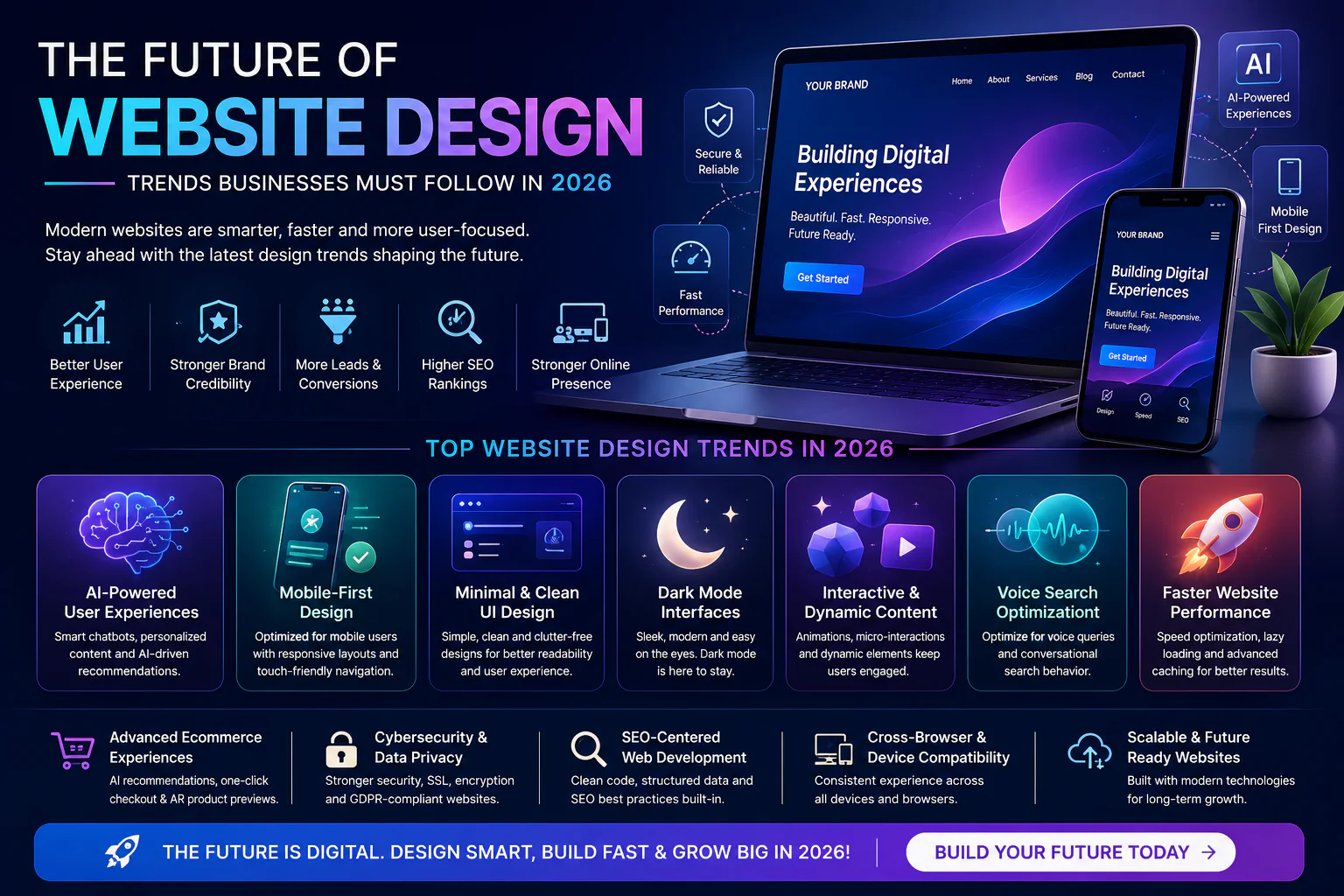
In the rapidly evolving digital landscape, website design is no longer just about aesthetics. Modern websites must deliver speed, performance, personalization, security, and seamless user experiences across all devices. As businesses compete for online attention, following the latest website design trends has become essential for staying ahead in 2026.
From AI-powered experiences to mobile-first interfaces, the future of web design focuses on creating smarter, faster, and more engaging digital platforms.
Why Website Design Matters More Than Ever
A website is often the first interaction customers have with a business. Studies show that users decide within seconds whether they trust a website or leave it. A professionally designed website can:
- Improve brand credibility
- Increase customer engagement
- Generate more leads and sales
- Improve SEO rankings
- Enhance user experience
- Strengthen online presence
Businesses investing in modern website design gain a significant competitive advantage.
Top Website Design Trends in 2026
AI-Powered User Experiences
Artificial Intelligence is transforming website interactions. Businesses are integrating AI features such as:
- AI chatbots for customer support
- Personalized content recommendations
- Smart search functionality
- Automated customer assistance
- Predictive user behavior analysis
AI helps businesses provide faster and more personalized experiences to users.
Mobile-First Design
With most internet users browsing through smartphones, mobile-first design is no longer optional. Websites must be optimized for:
- Fast mobile loading speeds
- Responsive layouts
- Touch-friendly navigation
- Mobile checkout experiences
- Cross-device compatibility
Google also prioritizes mobile-friendly websites in search rankings.
Minimal and Clean UI Design
Modern users prefer websites that are clean, simple, and easy to navigate. Minimalistic design trends focus on:
- White space usage
- Bold typography
- Clear call-to-actions
- Simplified navigation
- Fast-loading visuals
A clutter-free interface improves usability and conversion rates.
Dark Mode Interfaces
Dark mode continues to grow in popularity due to its modern appearance and reduced eye strain. Many brands now offer both light and dark viewing options for enhanced user comfort.
Interactive and Dynamic Content
Interactive design keeps users engaged longer. Businesses are using:
- Animations
- Hover effects
- Interactive scrolling
- Micro-interactions
- Motion graphics
- Video backgrounds
Dynamic experiences improve user engagement and make websites feel more modern.
Voice Search Optimization
As voice assistants become more common, websites must adapt for voice search queries. Voice optimization includes:
- Conversational keywords
- Faster website performance
- FAQ-focused content
- Structured data implementation
Businesses optimizing for voice search can improve visibility in future search results.
Faster Website Performance
Website speed directly affects SEO rankings and user experience. Slow websites lead to higher bounce rates and lost customers.
Modern performance optimization includes:
- Lightweight coding
- Image optimization
- CDN integration
- Advanced caching
- Lazy loading techniques
Speed optimization is now a major part of professional web development.
Advanced Ecommerce Experiences
Ecommerce websites are becoming more immersive and customer-focused. Key ecommerce trends include:
- One-click checkout
- AI product recommendations
- AR product previews
- Personalized shopping experiences
- Subscription-based models
- Secure payment gateways
Platforms like WordPress WooCommerce and Shopify continue to dominate ecommerce development.
Cybersecurity and Data Privacy
As cyber threats increase, website security is becoming a critical priority. Businesses must implement:
- SSL certificates
- Secure hosting
- Malware protection
- Firewall integration
- Data encryption
- GDPR-compliant systems
Secure websites improve customer trust and protect business data.
SEO-Centered Web Development
Modern web design and SEO work together. SEO-friendly websites include:
- Clean coding structure
- Mobile responsiveness
- Optimized page speed
- Structured content
- Technical SEO implementation
- Schema markup
Businesses focusing on SEO from the design stage achieve better long-term visibility.
Importance of Professional Web Development
A professionally developed website is more than just a digital brochure. It becomes a business growth tool that supports:
- Lead generation
- Online sales
- Brand awareness
- Customer communication
- Marketing campaigns
- Business automation
Custom web applications, WordPress development, Shopify stores, and mobile applications all contribute to a stronger digital ecosystem.
The future of website design in 2026 revolves around user experience, speed, personalization, and intelligent technology integration. Businesses that adapt to modern design trends can improve customer engagement, strengthen their brand, and stay competitive in the digital marketplace.
Investing in professional website design and development is no longer an option — it is a necessity for businesses aiming for long-term online success.
Written by

Janardhan Reddy
Founder & CEO