
Share
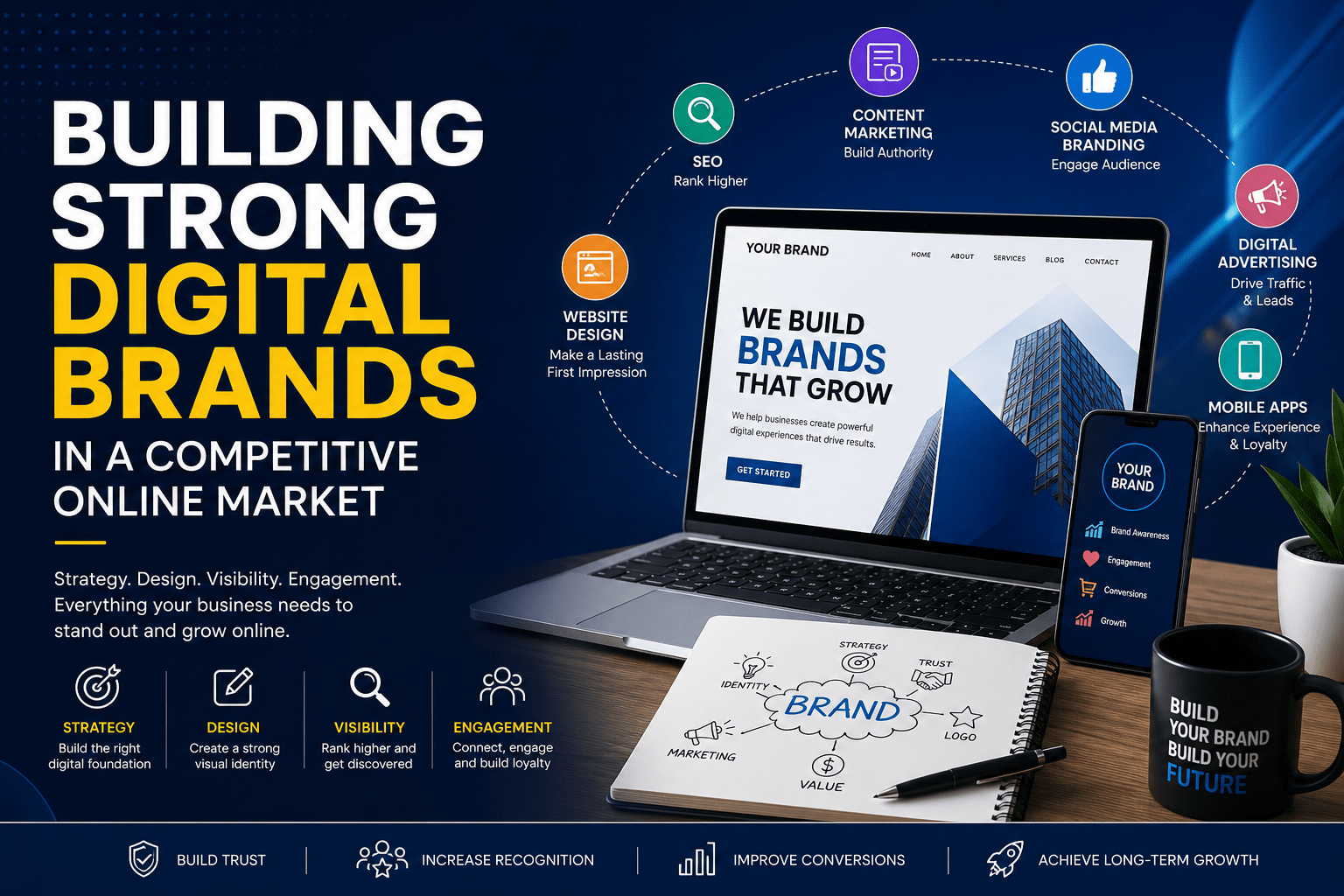
In today’s fast-moving digital world, having an online presence is no longer enough. Businesses must create a strong digital brand that builds trust, attracts customers, and stands out in a highly competitive market. Whether you are a startup, ecommerce business, service provider, or enterprise company, your digital brand becomes the face of your business online.
A successful digital brand is not just about a logo or website design. It is a combination of strategy, user experience, marketing, communication, and consistent customer engagement across all digital platforms.
What is a Digital Brand?
A digital brand is the online identity of a business. It includes:
- Website design and user experience
- Logo and visual identity
- Social media presence
- Content and communication style
- Search engine visibility
- Customer reviews and reputation
- Digital advertising and campaigns
Your digital brand influences how customers perceive your business and whether they choose your services over competitors.
Why Strong Digital Branding Matters
1. Creates Trust and Credibility
Customers are more likely to engage with brands that appear professional, consistent, and reliable online. A modern website, active social media profiles, and positive customer experiences help build confidence.
2. Improves Brand RecognitionConsistent branding across websites, mobile applications, social media, and marketing materials makes your business memorable. Strong visual identity and messaging help customers recognize your brand instantly.
3. Helps Businesses Stand Out
With thousands of businesses competing online, branding becomes a key differentiator. Unique design, quality content, and strategic digital marketing help businesses gain attention in crowded markets.
4. Increases Customer Engagement
Interactive websites, engaging social media campaigns, and personalized content improve customer interaction and build long-term relationships.
5. Supports Business Growth
A strong digital brand attracts organic traffic, generates leads, improves conversions, and supports long-term business expansion.
Key Elements of a Strong Digital Brand
Professional Website Design
Your website is often the first impression customers have of your business. A professionally designed website should be:
- Mobile responsive
- Fast loading
- SEO optimized
- User-friendly
- Secure and scalable
- Visually appealing
Businesses today prefer platforms like WordPress, Shopify, and custom web applications to create scalable digital experiences.
Search Engine Optimization (SEO)
SEO helps your website rank higher on search engines like Google. Strong SEO strategies include:
- Keyword optimization
- Technical SEO
- Local SEO
- Content marketing
- Website speed optimization
- Link building
Higher rankings increase visibility and attract quality traffic to your business.
Social Media Branding
Social media platforms are powerful tools for building brand awareness and customer engagement. Businesses should maintain consistent branding across:
- YouTube
- X (Twitter)
Creative content, reels, videos, and advertising campaigns help brands connect with their target audience effectively.
Content Marketing
High-quality content establishes authority and builds customer trust. Businesses can use:
- Blogs
- Case studies
- Videos
- Infographics
- Email marketing
- Educational guides
Valuable content improves SEO performance while positioning the brand as an industry expert.
Mobile Application Development
Mobile applications enhance customer convenience and improve engagement. Businesses investing in Android and iOS app development can offer personalized experiences, loyalty features, notifications, and seamless services.
Performance Marketing and Advertising
Digital advertising helps businesses reach targeted audiences quickly. Effective platforms include:
- Google Ads
- Meta Ads
- YouTube Ads
- LinkedIn Advertising
Strategic campaigns improve lead generation, conversions, and return on investment.
Importance of Brand Consistency
One of the biggest mistakes businesses make is inconsistent branding. Your colors, typography, messaging, tone, and visual identity should remain consistent across all platforms.
Consistency builds familiarity, trust, and professionalism.
Future of Digital Branding
As technology evolves, digital branding is becoming more personalized and interactive. Businesses are now integrating:
- Artificial Intelligence (AI)
- Chatbots
- Voice search optimization
- Video-first marketing
- Data-driven personalization
- Automation tools
Brands that adapt to new technologies will gain a competitive advantage in the digital marketplace.
Building a strong digital brand requires more than just creating a website or social media page. It involves strategic planning, creative design, digital marketing, customer engagement, and continuous optimization.
Businesses that invest in strong digital branding can improve visibility, build customer trust, increase conversions, and achieve long-term growth in the competitive online market.
For companies looking to succeed digitally, professional website development, mobile applications, SEO, branding, and digital marketing services play a crucial role in creating a lasting online presence.
Written by

Janardhan Reddy
Founder & CEO